
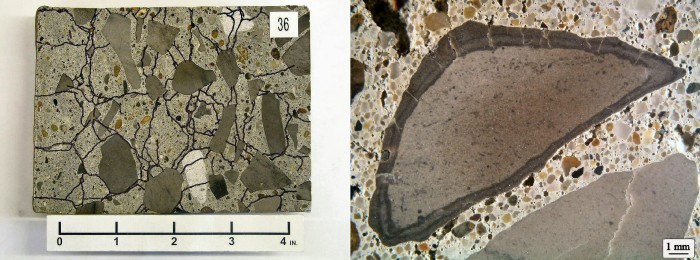
Petrographic Examination of Concrete
Petrographic examinations of concrete are typically performed due to the premature failure of an existing concrete structure or a problem during a construction project. A petrographer is retained to determine the cause of the problem and often to determine who is responsible. Petrographic examinations are also often performed as part of a condition study to determine if a concrete structure can be rehabilitated or needs to be replaced. Common problems requiring petrographic examinations are given below:
- • Surface Scaling
- • Delamination
- • Aggregate Popouts
- • Plastic Shrinkage Cracking
- • Corrosion of Reinforcing Steel
- • Low Strength Test Results
- • Improper Set Time
- • Blistering
- • Dusting
- • Drying Shrinkage Cracking
- • Structural Cracking
- • D-Cracking
- • Cement-Aggregate Reactions
- • Discoloration
- • Sulfate Attack
- • Acid Attack
- • Fire Damage
- • Pyrrhotite Oxidation
A Petrographic Examination Can Provide Information About:
Fine & Coarse Aggregates
- • Aggregate Type & Composition
- • Quality of Aggregates
- • Presence of Deleterious Aggregates
- • Identification of Cement Aggregate Reactions
- • Presence of Dirty Aggregates
Cement Paste
- • Cement Paste Content
- • Water-Cementitious Ratio
- • Degree of Cement Hydration
- • Presence and Relative Abundance of Fly Ash
- • Presence and Relative Abundance of Slag Cement
Air Void System
- • Total Air Void Content
- • Size and Spacing of Air Voids
- • Distribution of Air Voids
- • Relative Amount of Entrapped Air
Condition of Wearing Surface Concrete
- • Increased or Decreased Water-Cementitious Ratio
- • Entrained Air Void Content
Coarse Aggregate/Cement Paste Interface
Extent of Corrosion of Reinforcing Steel
Cause of Cracking Distress
Extent of Carbonation
Presence of Curing Compound
Who Is At Fault?
Listed below are some examples of who would likely be responsible for various concrete issues:
Ready Mix Supplier
- • Inadequate Air Void System
- • Elevated Water-Cementitious Ratio
- • Improper Setting Time
- • Improper Mixture Proportions
Concrete Contractor/Finisher
- • Addition of Water on Site
- • Improper Finishing Techniques
- • Improper Curing
- • Improper Joint Placement, Spacing or Timing
Aggregate Supplier
- • Physically or Chemically Deleterious Constituents
- • Poor Aggregate Gradation
General Contractor
- • Protection of Concrete from Adverse Weather